
Homemade Pasta
Who are you trying to impress?
⏲️ Prep Time
20 minutes (+ 30 inactive)
⏲️ Cook Time
5 minutes
🍴 Serves
4
Ingredients
- 2 cups flour
- 3 eggs
- Pinch of salt
- 1 1/2 teaspoon olive oil
Directions
- On a flat surface add your flour and make a well in the center
- Add your salt, oil and eggs to the well in the flour and slowly scrape the edges into the mixture until combined
- Knead for 8 to 10 minutes, until dough is smooth
- Cover and rest for at least 30 minutes
- Shape your dough, as in the example below
- Divide into 4 pieces
- Roll each piece into a long snake about the width of one of your fingers
- Cut into half inch pieces
- Using your fingers push down on the dough, pulling your fingers towards you
- Boil until cooked through, if making pasta shape described above then about 5-6 minutes should be enough
Step by Step Directions
Start by making a well in the middle of your flour. I’ve found that using the backside of your measuring cup often gets you the shape you want and is pretty uniform.
Crack your eggs and add your salt and oil into the middle of the well. You can slightly scramble your eggs if you want but this isn’t necessary.
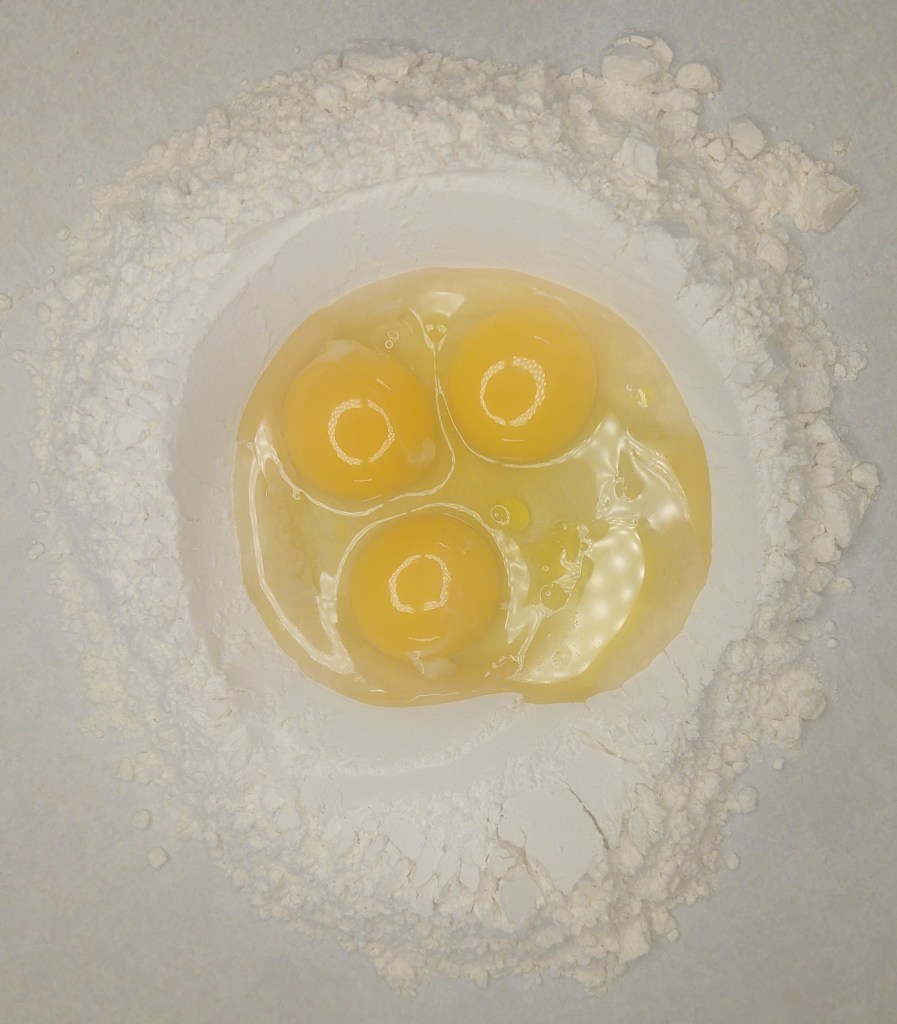
Slowly scrape the interior of your well of flour into the liquid into the middle until it disappears in the liquid. Personally I like to play a game of how long I can scrape from the well before the liquid breaks out. But if you’re all business than feel free to ignore that.

You should continue this process until a loose dough has formed. At this point I like to shape it into a rough ball because that will make the kneading easier. Don’t worry if there a bunch of errant dough pieces, when we knead these will all be incorporated into the dough.
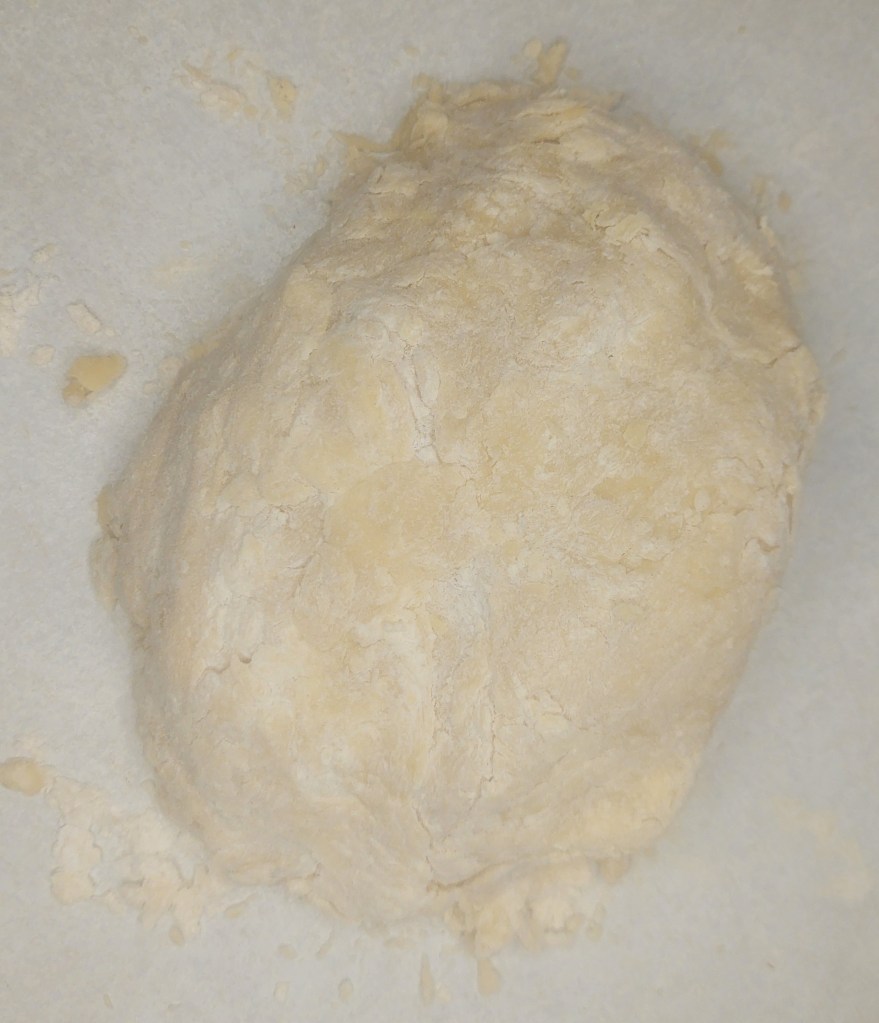
Now it’s time to knead. We’re going to want to do this for 8-10 minutes. It’s going to feel like a long time, and that’s because it is. We really need to build the gluten up in our pasta, otherwise it might break when we’re cooking it, or in our final dish.
I’ve found that the “V” method of kneading is most efficient for me (feel free to do whatever you want though). This is where you start with the dough near the center of your body on whatever surface you’re using and then using your right hand and applying pressure into the surface of the dough you roll it up and to your left, and then back towards the center of your body. You then repeat the process but using your left hand and kneading the dough up and to your right and back again. You can develop a fairly nice rhythm using this methodology.
The dough will be very rough to begin with, we can add more water or more flour (just a little at a time) to get the dough to the proper consistency. However, I would wait until at least halfway through your kneading before changing the consistency of the dough.
Once your dough is fairly elastic you’ll want to cover it and have it rest for at least a half hour.
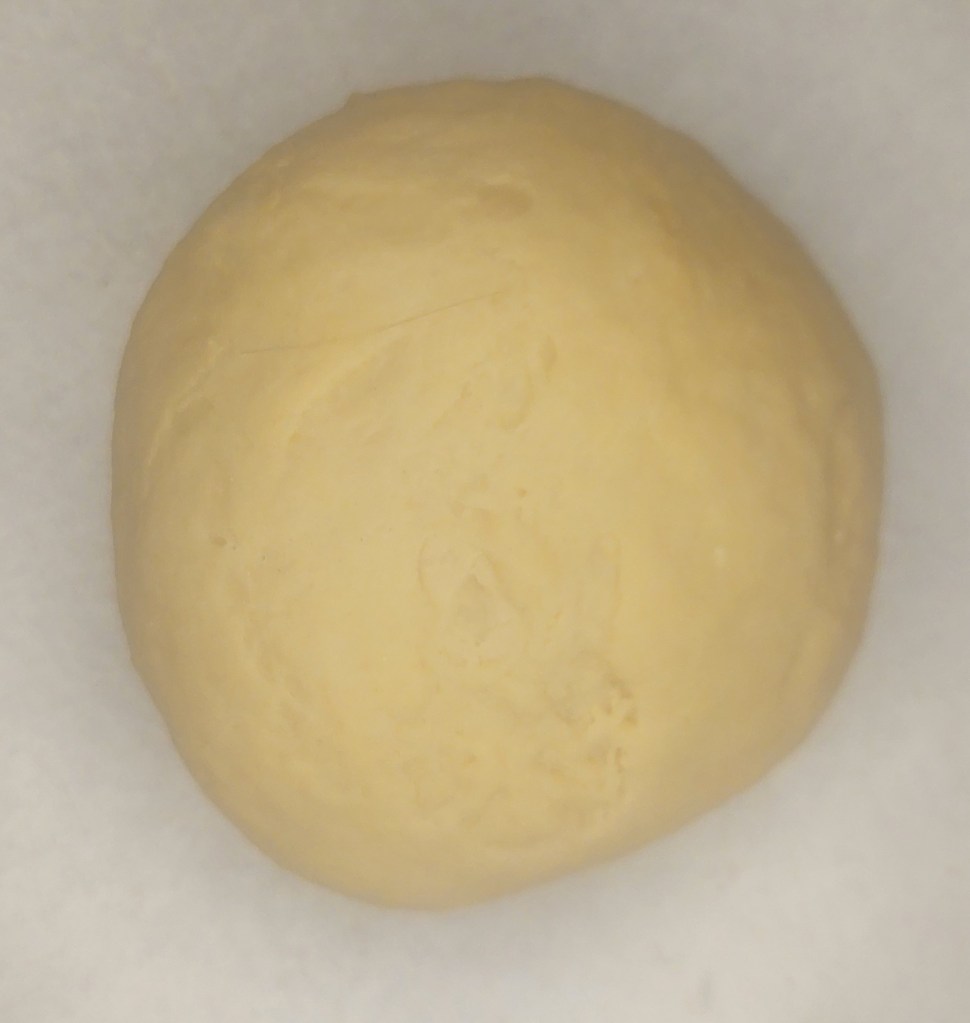
At this point in time I like to start a pot of salted water boiling on the stove. It might be a bit early depending on what type of pasta you’re making, but it can’t hurt.
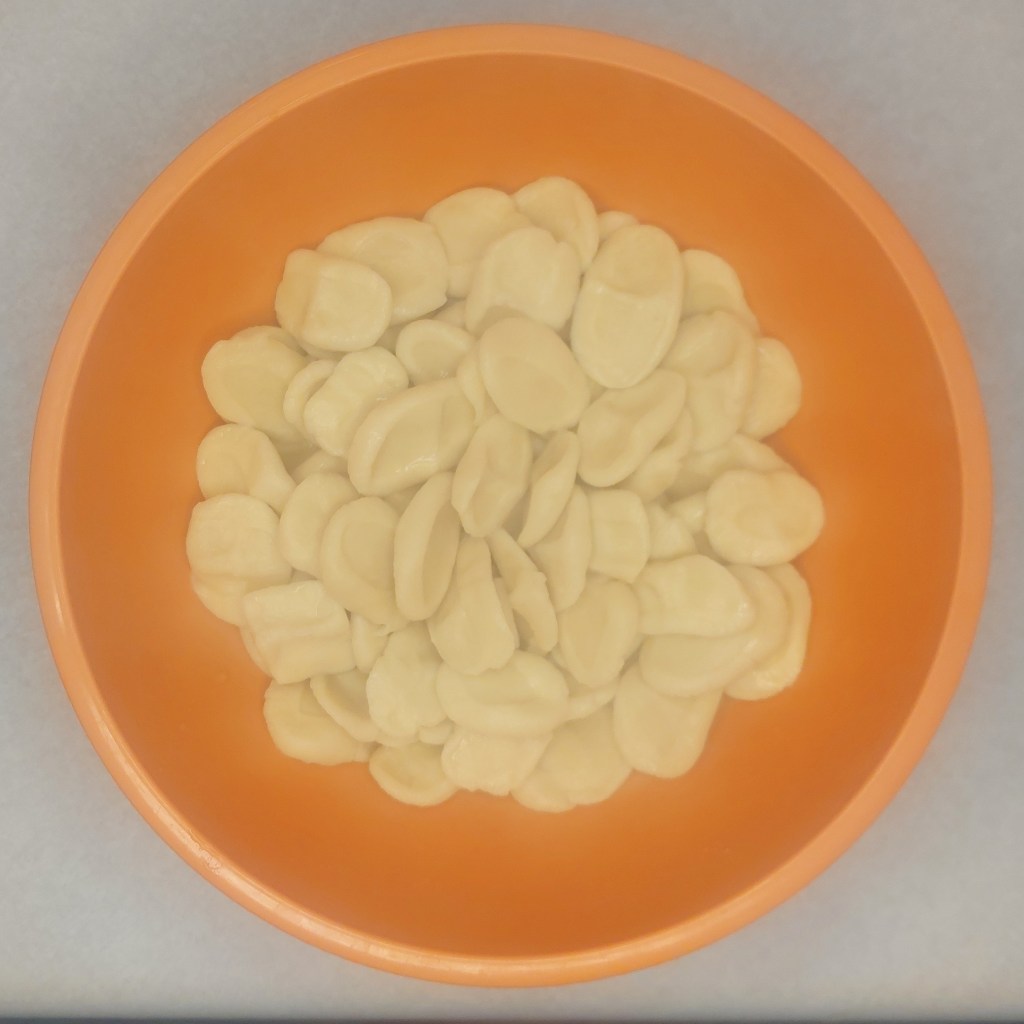
The pasta shape I think is easiest to make that isn’t pici (think just rolled spaghetti) is orecchiette (Italian for “ear”). Traditionally made without the egg it’s just a pretty easy shape to make.
- Divide your dough into manageable pieces (4-6 should be good)
- Roll your dough into a long worm/log of even thickness (about the thickness of a finger)
- Use a knife (or pizza cutter) and cut roughly half inch or smaller pieces of dough
- The smaller the dough piece the more pieces of pasta you can make, and the easier it will be to cook
- Using several fingers push directly down on your pieces of dough and pull your fingers back towards you
- This should give you the “ear” shape where you have an outer edge that is thicker and then a raised shape in the middle
- Repeat the process with all remaining dough
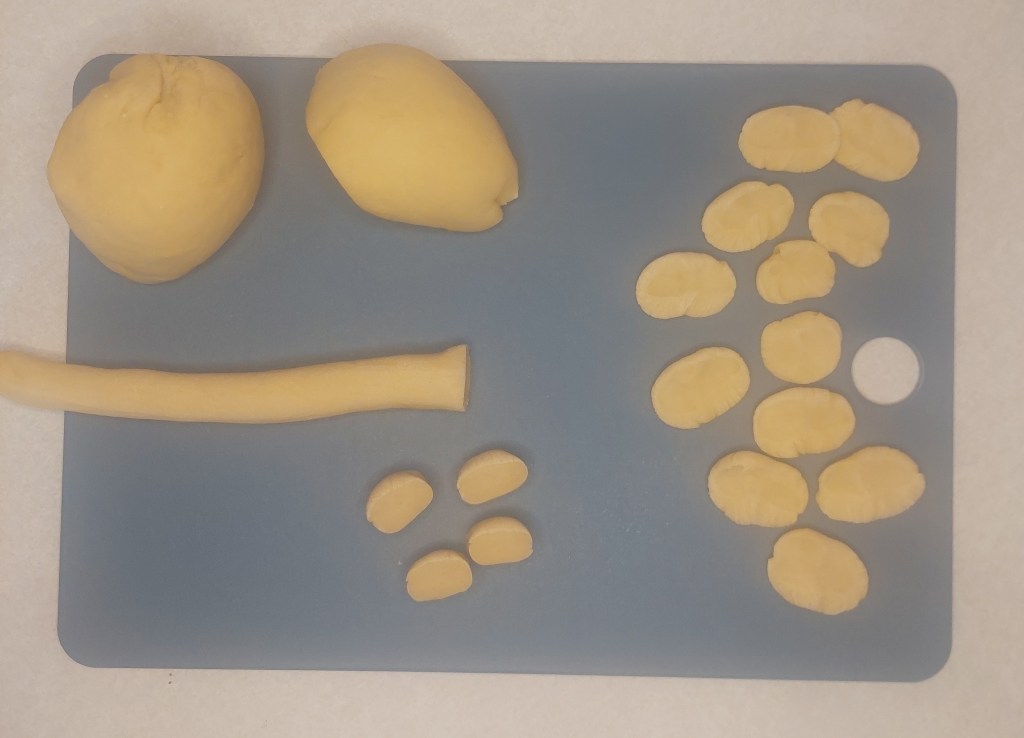
For the size and shape of the pasta we made you should only need to cook it for about 5-6 minutes in boiling water (start checking for doneness around 3 minutes). Fresh pasta should ideally float compared to the dry counterparts but this isn’t necessarily a sign that it is done cooking.
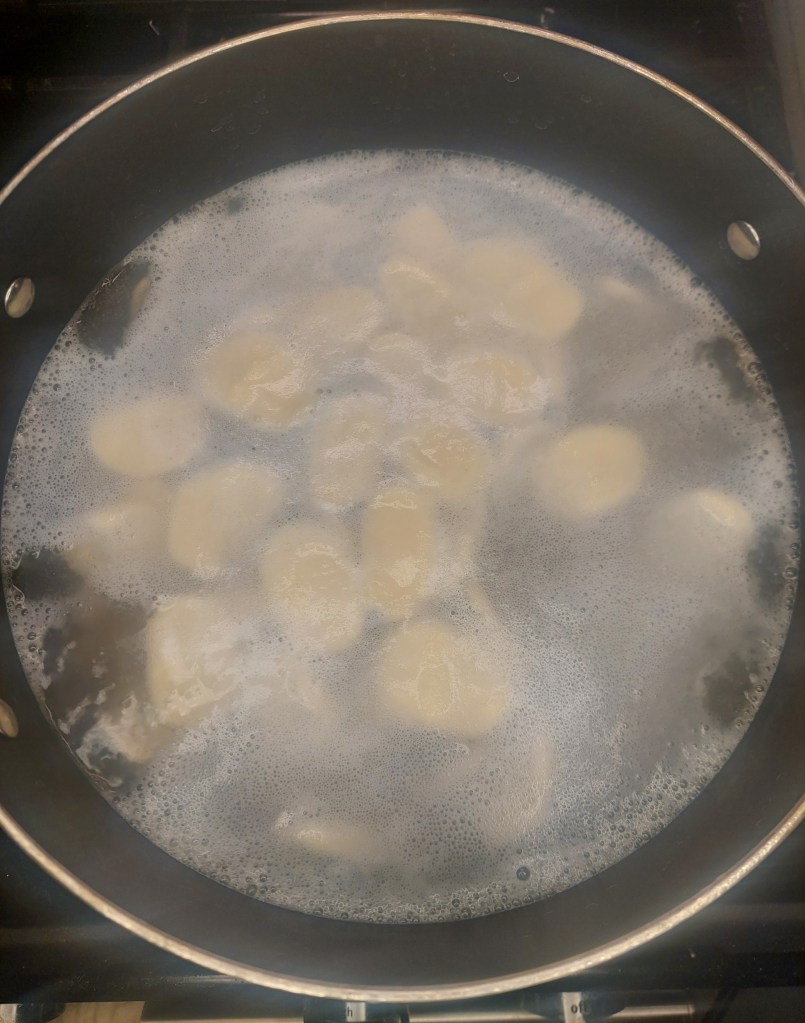
Drain your pasta and then add whatever sauce or other ingredients you might want.
Enjoy.
Variations
- Change the shape pasta you’re making, I chose what I did because it’s fast and doesn’t require special tools. If you the tools to make a fancier pasta then go right a head and do so.
- You can change up the type of flour being used, whole wheat flour will be healthier, semolina would be more traditional, it’s up to you.
- Only use water instead of the eggs and olive oil, both can be controversial, but I’ve found they are consistent.
Unsolicited Feedback
- IC: The stuff from the box is better.
- BD: Why didn’t you make a shape I like, like macaroni?
- DR: Carbs are good.
 Tuesday Dinners